

 Product List
Product List
Product List
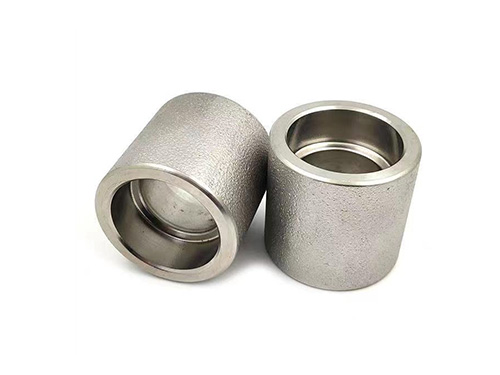
Stainless Steel Socket Fitting
Stainless Steel Socket Fitting is a socket type pipe fitting made of stainless steel material. With excellent corrosion resistance and sealing performance, it is widely used in pipeline systems such as chemical, food, and pharmaceutical industries that require high medium purity. It is an ideal choice to replace carbon steel socket fittings in corrosive environments.
Material and Structure
The core material is austenitic stainless steel such as 304 and 316L: 304 stainless steel contains 18% chromium and 8% nickel, and can withstand general corrosive media; 316L, with the addition of molybdenum element (2-3%) on the basis of 304, has stronger resistance to pitting corrosion, especially suitable for chlorine containing environments such as seawater and saltwater.
The structure is similar to that of carbon steel socket fittings, with one end having a stepped socket (with an inner diameter 0.5-1mm larger than the outer diameter of the pipeline) and the other end having a socket. Preliminary positioning is achieved through socket fitting. Common types include 90 °/45 ° socket elbows, socket tees, pipe clamps, etc., with diameters ranging from DN15 to DN100, meeting the needs of small and medium-sized pipe diameter systems.
Connection and Performance
The manufacturing process is mainly based on forging, with dense and pore free materials. The pressure resistance level reaches Class 300 (5MPa), and some high-pressure models can reach Class 600 (10MPa). The connection method is socket welding: after the pipeline is inserted into the socket, a closed ring is welded on the outside of the interface. After welding, it is acid washed and passivated to restore the passivation film on the stainless steel surface and enhance corrosion resistance.
Compared to carbon steel products, its advantages are significant: it has a wider working temperature range (-196 ℃ to 450 ℃) and can withstand corrosive media such as organic acids and steam condensate; Smooth surface and less prone to scaling, suitable for clean pipeline systems in the food and pharmaceutical industries.
Application scenarios
Chemical production line: pipeline diversion and branching for transporting acid-base solutions and organic solvents;
Food processing: sterile pipeline connections for dairy and beverage production lines (316L material meets FDA standards);
Desalination system: socket elbows for seawater transportation pipelines (316L anti seawater corrosion);
Medical cleanroom: sterile connection of purified water and injection water pipelines.
Following ASME B16.11 and GB/T 14383 standards, although the cost is 3-5 times that of carbon steel socket fittings, it can reduce maintenance frequency in corrosive environments and is a more cost-effective choice for long-term use. During installation, carbon steel tool contamination should be avoided, and argon arc welding should be used for welding to ensure smooth and clean inner walls.

+86-15533769121

Jango

jango@yuntaopiping.com

Beixiaozhuangzi Industrial Zone, Mengcun Hui Autonomous County

Copyright © 2025-2026 http://www.yuntaopiping.com. All Rights Reserved Yuntao Piping Group.,Ltd.Copyright